
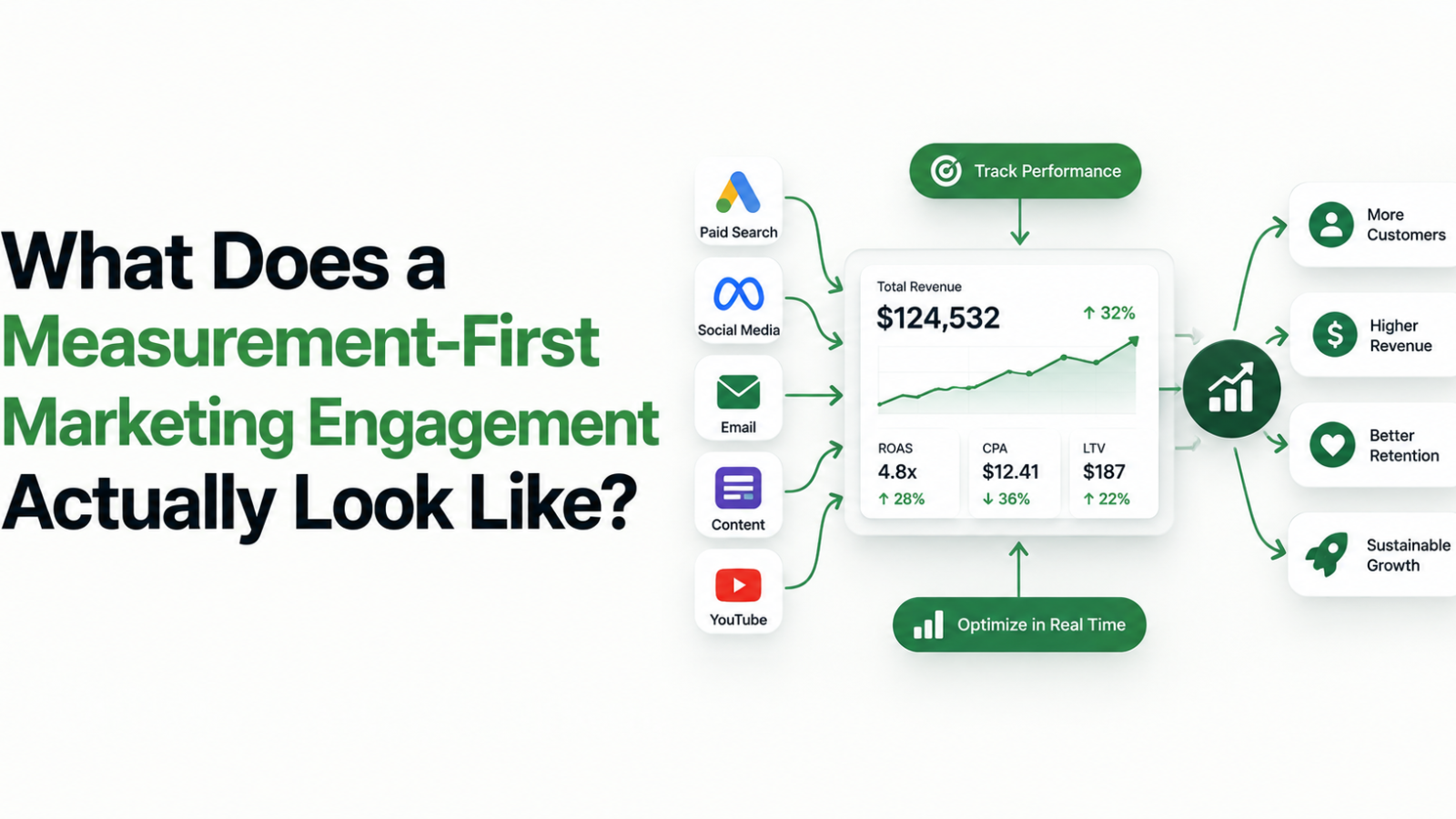
Most agencies are vague about this. We’re not.
When a founder asks “what do you actually do?” they deserve a specific answer, not a slide deck full of frameworks and stock photography.
Here’s the honest, week-by-week account of what a Mowsix engagement looks like: what we deliver, what we need from you, and what each stage actually feels like from where you’re sitting.
This is not our slickest piece of content. It’s probably the most useful thing we’ve written for someone considering hiring us.
Before week 1: the free audit
Every engagement starts with a 45-minute audit call. Not a sales call. We look at your GA4 setup, your ad accounts, your CRM configuration, and your current CAC and conversion data. We tell you what’s broken, what’s salvageable, and whether we’re genuinely the right fit for what you need.
If we’re not the right fit, whether that’s wrong stage, wrong budget, or wrong problem type, we’ll say so on the call. We’d much rather lose a prospective client early than onboard someone we can’t meaningfully help.
What you need for the audit: GA4 viewer access, Google Ads read access, a CRM login or some screenshots of your pipeline stages, and a rough sense of your current monthly spend and CAC. Even ballpark numbers are fine.
Weeks 1 to 3: measurement rebuild
This is non-negotiable. Every engagement starts here, regardless of what you came to us for. If you came for SEO, we start with measurement. If you came for paid acquisition, we start with measurement. If you came specifically for a GA4 rebuild, well, same.
The reason: every decision we make after week three is based on this data. If the data is wrong, all subsequent decisions are wrong too. We don’t want to be six months into an engagement and discover that our paid optimisation work was built on attribution that had been giving organic credit for paid conversions the whole time. We’ve seen that happen at agencies that skip this step. It’s not recoverable without starting over.
What we actually do in weeks 1 to 3:
- Full GA4 audit covering event schema, conversion configuration, attribution settings, consent mode, and cross-domain setup
- GTM audit: tag inventory, trigger logic, duplicate event checking, and data layer review
- CRM connectivity: connecting your CRM’s revenue events back to GA4 and to your ad platforms
- UTM taxonomy: building or rebuilding your campaign naming convention so GA4 can actually read channel data correctly
- Attribution dashboard: a Looker Studio build that becomes your source of truth for all reporting going forward
- Documentation: everything we build gets documented so your team or a future agency can pick it up without needing to reverse-engineer our work
What this stage actually feels like: Weeks two and three are often uncomfortable. This is when we find out how much has been miscounted. In most audits we find that somewhere between 30 and 50% of attributed conversions were either duplicated, misattributed, or based on proxy events that don’t reflect real business outcomes. That’s not a pleasant finding. But it’s a necessary one, because it means every previous budget decision was made on inaccurate information. Now you can make accurate ones.
What you need to provide: Admin access to GA4, GTM, Google Ads, Meta Ads, and your CRM. A 30-minute call with whoever manages your data layer or website, whether that’s a developer or a technical cofounder. And some patience for findings that may be surprising.
Weeks 4 to 6: strategy and launch
Once measurement is clean, we build the growth programme. What exactly this covers depends on what you came for: paid acquisition, SEO, CRO, or some combination.
For paid acquisition engagements:
- Keyword research and campaign architecture for Google Ads
- Audience segmentation and creative brief for Meta and LinkedIn
- Landing page audit and recommendations. We don’t launch paid traffic to an unconverted page. That’s a rule.
- Conversion event alignment: confirming campaigns optimise toward real business outcomes rather than proxy events
- Campaign launch and initial budget allocation based on the clean attribution data we built in weeks 1 to 3
For SEO engagements:
- Keyword gap analysis against your specific competitors, not a generic search volume exercise
- Technical SEO audit: crawlability, indexation, Core Web Vitals
- Content architecture: mapping buyer-intent keyword clusters to existing and planned pages
- On-page optimisation of your highest-priority commercial pages
- Content brief for the first editorial pieces
What this stage feels like: Faster than expected. Because we spent three weeks getting inside your data, we arrive at the strategy phase with significantly more context than a typical agency has at this point in an engagement. We don’t need another two weeks to “understand your business.” We already do.
Weeks 7 to 12: iteration and compounding
This is where the actual work lives. Growth isn’t a launch. It’s a cadence of testing, measuring, learning, and adjusting.
The reporting cadence:
- Weekly: A short async update, usually a Loom video or a written note, covering what moved, what didn’t, and what we’re changing. No deck. No 90-minute call for a status update. Just the things that actually matter.
- Monthly: A full revenue attribution report from Looker Studio. CAC by channel, pipeline by source, conversion rates across the funnel, and what we’re doing next and why.
- Quarterly: A strategic review. What’s working well enough to scale, what’s been tested and should be retired, and where the next growth lever is.
How decisions get made: Every meaningful change to strategy or budget is explained before it happens, with the data behind it. You’re never surprised by a decision. You’re involved in making it. We don’t move your budget without telling you why.
What this stage feels like: The first honest view of your marketing performance you’ve probably had. The Looker Studio dashboard is live from week three. By week eight, you have two months of clean data to make decisions from. The absence of vanity metrics, no reporting on impressions or engagement rate or traffic for its own sake, can feel initially like something is missing. It isn’t. Revenue, CAC, and pipeline are the numbers that pay salaries.
The realistic timeline for impact
We tell every client this at the start:
- Weeks 2 to 4: Attribution clarity. For the first time, you’ll know what’s actually working.
- Month 2: Early paid channel improvements. Campaigns running on clean conversion data typically show CAC movement within six to eight weeks.
- Month 3: Meaningful paid results. By month three you should have enough data to confirm which channels are efficient, which aren’t, and what the next allocation should look like.
- Months 4 to 6: SEO starts contributing. Organic search is a four to six month channel at minimum. The content and technical work from months one and two begins generating traffic and leads from month four or five onwards.
- Month 6 and beyond: Compounding. Each month of clean data improves algorithm quality, organic authority, and funnel conversion. Month six is meaningfully more efficient than month one, not because we worked harder, but because the system has more accurate signal to work from.
What you own when we’re done
Everything. The GA4 configuration, GTM container, CRM integration, attribution dashboard, campaign structures, content. All of it is yours. There’s no dependency on Mowsix to maintain any system we build. The documentation we produce means your team or any future agency can pick up where we left off without needing to reverse-engineer a black box.
This is a deliberate choice. We think the right kind of growth agency makes itself progressively less necessary over time, not more.
If this sounds like what you need, start with the free audit. 45 minutes. No pitch deck. Just a diagnosis and an honest conversation about whether we’re the right fit.
Related: Marketing Measurement | Performance SEO | Pricing
Numbers most founders never see.
One email every other Friday. The CAC, ROAS, and pipeline benchmarks behind real growth — pulled from the work we run for actual startups.
Unsubscribe in one click. We don't share your email.


